
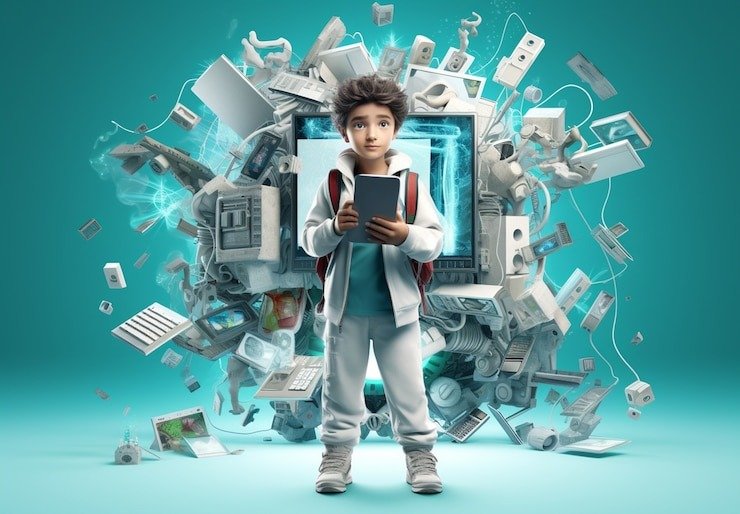
In a world that is in constant flux, the pace of technological advancement is accelerating like never before. The innovations we are witnessing today not only reshape our daily lives but also offer a glimpse into the future of technology. From artificial intelligence to blockchain, from the Internet of Things (IoT) to virtual reality, the digital landscape is evolving rapidly. In this article, we will explore some of the most amazing digital innovations that are set to define the future and revolutionize various industries.
Artificial Intelligence: The Brain of the Future
Artificial Intelligence (AI) has become a cornerstone of modern technology, transforming how we interact with the world. From voice assistants like Siri and Alexa to advanced machine learning algorithms that power everything from healthcare diagnostics to financial forecasting, AI is at the forefront of innovation. The future of AI promises even more groundbreaking developments, including:
- Enhanced Machine Learning: Machine learning algorithms are becoming more sophisticated, enabling systems to learn from vast amounts of data and improve over time.
- Natural Language Processing: Advances in natural language processing are making human-computer interactions more intuitive, breaking down language barriers and facilitating seamless communication.
- AI in Healthcare: AI is revolutionizing healthcare by predicting patient outcomes, personalizing treatment plans, and even assisting in surgical procedures.
Blockchain: The Secure Digital Ledger
Blockchain technology is often associated with cryptocurrencies like Bitcoin, but its potential extends far beyond digital currencies. This decentralized ledger technology offers unparalleled security, transparency, and efficiency. Key innovations in blockchain include:
- Smart Contracts: Self-executing contracts with the terms directly written into code, facilitating transactions without intermediaries.
- Supply Chain Transparency: Blockchain can track the provenance of goods, ensuring authenticity and reducing fraud.
- Decentralized Finance (DeFi): Removing traditional financial intermediaries to create a more inclusive financial system.
The Internet of Things (IoT): Connecting the World
The Internet of Things refers to the interconnected network of physical devices that communicate and exchange data. This innovation is transforming industries and everyday life in remarkable ways:
- Smart Homes: From smart thermostats to connected security systems, IoT enhances convenience and energy efficiency in our homes.
- Healthcare Monitoring: Wearable devices can track health metrics in real-time, allowing for proactive management of health conditions.
- Industrial IoT: In manufacturing, IoT sensors can optimize operations, reduce downtime, and improve safety standards.
Virtual and Augmented Reality: New Realities
Virtual Reality (VR) and Augmented Reality (AR) are changing the way we experience the digital world. These technologies have applications in various fields, including:
- Gaming and Entertainment: Immersive experiences that transport users to new worlds and enhance gameplay.
- Education and Training: Simulation-based learning environments provide hands-on training without the risks associated with real-life scenarios.
- Retail Experiences: AR is being used to create virtual fitting rooms and interactive shopping experiences that engage consumers in novel ways.
Quantum Computing: The Next Frontier
Quantum computing represents a paradigm shift in processing power, with the potential to solve problems that are currently intractable for classical computers. Innovations in this field include:
- Complex Problem Solving: Quantum computers can tackle problems in cryptography, drug discovery, and optimization at unprecedented speeds.
- Breakthroughs in Simulations: They can simulate molecular interactions, paving the way for advancements in chemistry and materials science.
- Enhanced Security: Quantum key distribution could offer unbreakable encryption methods for secure communication.
5G Technology: The Connectivity Revolution
The rollout of 5G networks is a game changer for connectivity, enabling faster speeds, lower latency, and the capacity to connect a massive number of devices. The implications of 5G include:
- Enhanced Mobile Experiences: Streaming, gaming, and browsing with virtually no delays.
- Smart Cities: IoT devices can communicate in real-time, improving traffic management, energy use, and public safety.
- Remote Work and Learning: Increased connectivity supports remote collaboration tools, enhancing productivity and learning experiences.
“The future of technology is not merely about innovation; it’s about how these innovations enhance our lives, create opportunities, and solve real-world problems.”
Our contribution: Embracing the Future
The future of technology holds boundless possibilities, driven by the amazing digital innovations of today. As we embrace these advancements, it is essential to consider their ethical implications and strive for responsible development. The digital landscape is a canvas on which we can paint a better future—not just for ourselves but for generations to come. By harnessing the power of AI, blockchain, IoT, VR/AR, quantum computing, and 5G, we can create a world that is more connected, efficient, and equitable. The journey has only just begun, and the best is yet to come.
